How to Install an O2 Oxygen Sensor Spacer: A Complete Guide
Summary
O2 oxygen sensor spacers are commonly used in the automotive aftermarket to reduce the chances of a check engine light triggered by high-flow catalytic converters or cat deletes. This comprehensive guide covers the installation process, tools needed, precautions, and tips for success, making it perfect for DIY enthusiasts and professional installers alike.
Table of Contents
-
What is an O2 Oxygen Sensor Spacer?
-
When and Why to Use One
-
Tools & Supplies You’ll Need
-
Step-by-Step Installation Instructions
-
Post-Installation Checklist
-
Common Mistakes to Avoid
-
FAQs
1. What is an O2 Oxygen Sensor Spacer?
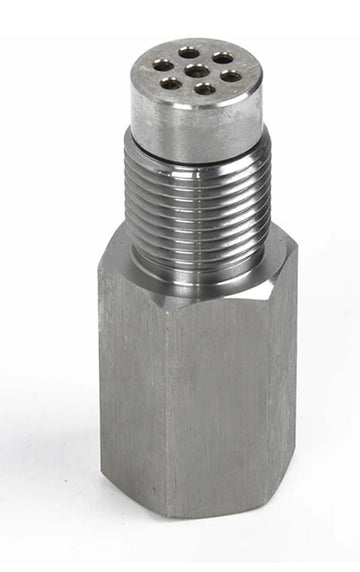
An O2 oxygen sensor spacer is a threaded adapter that positions the oxygen sensor slightly out of the main exhaust gas stream. It helps reduce the likelihood of triggering error codes like P0420 or P0430, which indicate catalyst inefficiency. These are typically installed on downstream (post-cat) O2 oxygen sensors.
2. When and Why to Use One
-
After installing a high-flow catalytic converter
-
When running a catless downpipe or exhaust system
-
To delay or suppress the check engine light (CEL)
-
As part of a tuning setup (Stage 2 or higher mods)
Note: O2 oxygen sensor spacers are not a substitute for legal emissions components and may not be street-legal in all areas.
3. Tools & Supplies You’ll Need
-
Oxygen sensor socket or 22mm wrench
-
O2 oxygen sensor spacer (straight, 90-degree, or mini-cat style)
-
Anti-seize lubricant
-
Jack and jack stands or vehicle lift
-
OBD2 scanner (optional but helpful)
4. Step-by-Step Installation Instructions
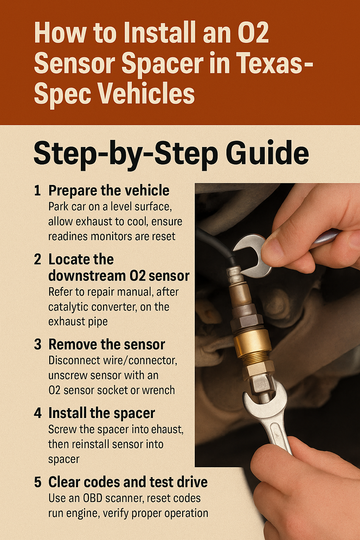
Step 1: Prepare the Vehicle
-
Park on a level surface
-
Allow the exhaust system to cool completely
-
Lift the car securely using a jack and jack stands
Step 2: Locate the Downstream O2 Oxygen Sensor
-
Find the sensor after the catalytic converter
-
Use your vehicle’s repair manual or a scan tool for confirmation
Step 3: Remove the O2 Oxygen Sensor
-
Disconnect the sensor wiring
-
Use the O2 oxygen sensor socket or wrench to loosen and remove it
Step 4: Install the Spacer
-
Apply anti-seize to the spacer threads
-
Thread the spacer into the original O2 oxygen bung
-
Hand-tighten, then snug with a wrench
Step 5: Reinstall the O2 Oxygen Sensor
-
Thread the sensor into the spacer
-
Reconnect the wiring harness
-
Check that wires are not in contact with hot or moving parts
Step 6: Clear Codes and Test
-
Use an OBD2 scanner to clear any CEL
-
Drive through a typical drive cycle to allow readiness monitors to reset
5. Post-Installation Checklist
-
No CEL or codes present
-
All wiring secure
-
Spacer and sensor snug with no exhaust leaks
-
Readiness monitors show "complete"
6. Common Mistakes to Avoid
-
Installing the spacer on the upstream sensor (can affect air-fuel ratio)
-
Cross-threading the sensor or spacer
-
Over-tightening and damaging the sensor
-
Using on vehicles with sensitive emissions diagnostics (not all ECUs are fooled)
7. FAQs
Q: Can I use an O2 oxygen spacer to pass emissions testing?
A: It depends on your location and the inspection method. Spacers might help pass an OBD scan, but they don’t guarantee compliance.
Q: What type of spacer should I use?
A: Straight spacers work for accessible locations. Use 90-degree or mini-cat styles for tight spaces or better effectiveness.
Q: Is anti-seize required?
A: It’s strongly recommended to prevent seizing during future removal.
Q: Will a spacer permanently fix a catalyst inefficiency code?
A: No. It's a workaround that may temporarily suppress the code, not a substitute for proper repair.
Looking for the best O2 oxygen sensor spacers? Shop our top-rated collection at Ghaly Motor Parts and get expert support for your installation.
![ Fix P0420 Fast: Do O2 Sensor Spacers Really Work? [Legal Tips Inside]](http://ghalysmotorparts.com/cdn/shop/articles/ChatGPT_Image_Oct_10_2025_10_40_32_AM.png?v=1760118069&width=360)
![Do O2 Sensor Spacers Really Help Clear the P0420 Code? [Expert Guide]](http://ghalysmotorparts.com/cdn/shop/articles/ChatGPT_Image_Oct_9_2025_09_28_33_PM_654c1798-c0d4-428f-a5b6-f20b95661b54.png?v=1760129952&width=360)